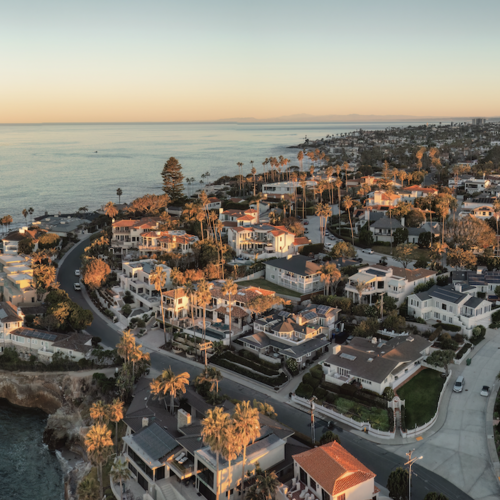

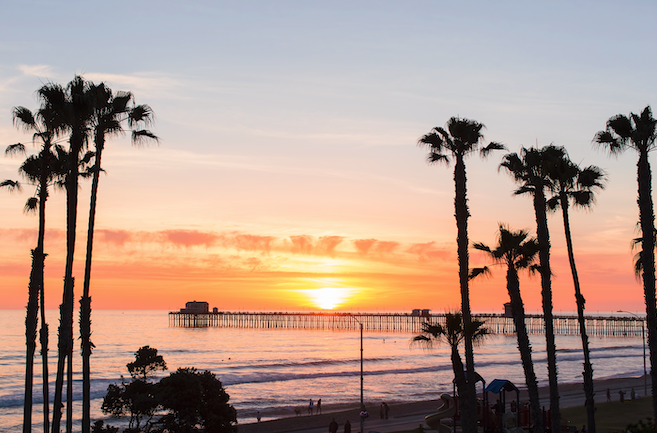
Oceanside has the same Pacific coastline, the same I-5 access, and the same train connection to downtown San Diego as several of North County’s most expensive coastal communities.
But in many cases, it still offers a lower entry point.
That’s only part of the reason more buyers are giving Oceanside a serious look. The city is evolving quickly, with new restaurants, major downtown investment, resort-style development, and one of the few large new-home communities available anywhere near the North County coast.
At the same time, Oceanside hasn’t lost the authentic, lived-in personality that has always set it apart. If you’re considering moving to Oceanside, here’s what’s changing—and why the city may deserve a place near the top of your San Diego home search.
Oceanside Isn’t Your Typical North County Beach Town
Many coastal communities in Southern California feel carefully polished. Oceanside has always been a little different.
For decades, it’s been home to military families, surfers, tradespeople, longtime residents, and buyers who wanted to live near the ocean without paying the prices found farther south. Its relationship with neighboring Camp Pendleton has also helped shape the city’s grounded, unpretentious identity.
You’ll still find local taco shops, independent surf stores, neighborhood restaurants, and pockets where parking near the beach is actually possible.
Oceanside feels like a real city, not simply a destination built for visitors. That authenticity is becoming increasingly appealing to buyers who want a coastal lifestyle with more personality and lower cost of entry.
Understanding Oceanside’s Location
Oceanside sits at the northern edge of San Diego County, directly below Camp Pendleton and the Orange County line.
Driving south on I-5 takes you through Carlsbad, Encinitas, Solana Beach, and Del Mar before reaching central San Diego. Travel time depends heavily on traffic, but Oceanside also offers transportation options that many other San Diego communities don’t.
The Oceanside Transit Center connects residents with:
- The COASTER, which travels south to downtown San Diego
- The SPRINTER, which runs east through Vista and San Marcos to Escondido
- Amtrak’s Pacific Surfliner
- Metrolink service toward Orange County and Los Angeles
The COASTER serves eight stations between Oceanside and downtown San Diego, while the SPRINTER spans approximately 22 miles along the Highway 78 corridor.
That makes Oceanside particularly interesting for remote and hybrid professionals, frequent travelers and anyone who’d rather not depend on a car for every regional trip.
Oceanside’s Neighborhoods Offer Very Different Lifestyles
One of the biggest mistakes buyers make is treating Oceanside like a single neighborhood.
It’s a large city with distinctly different housing markets and day-to-day experiences. Where you live within Oceanside can affect everything from your lot size and home style to your beach access, commute, and budget.
Coastal Oceanside and Downtown
West of I-5, you’ll find beach cottages, renovated bungalows, condos, townhomes, and newer luxury residences. Living here puts the beach, pier, restaurants, and downtown activity close by.
Properties near the water tend to command the city’s highest prices, particularly when they’re newer, extensively updated, or offer ocean views.
South Oceanside
South Oceanside feels like a small beach town within the larger city. The neighborhood is known for its residential streets, older beach homes, coffee shops, restaurants and local businesses. It’s especially appealing to buyers who want coastal character without being directly in the center of downtown activity.
Inland Oceanside
Head east into the 92056 and 92057 ZIP codes, and the housing landscape changes. Buyers can generally find larger homes, more square footage, quieter residential streets, and communities designed around a more suburban lifestyle. These areas can make sense for households prioritizing space, neighborhood amenities, or access to the Highway 78 corridor.
North River Farms
Oceanside is also welcoming a major new master-planned community along the San Luis Rey River. North River Farms includes multiple collections of new single-family homes and planned amenities such as pools, a clubhouse, a fitness center, pickleball courts, parks, playgrounds, and trails.
In a region where much of the coastal housing stock is already established, the opportunity to purchase a brand-new home within a coastal San Diego city is significant.
5 Reasons Buyers Are Moving to Oceanside
1. It’s One of North County’s More Accessible Coastal Markets
Living close to the beach in North County generally comes with a substantial price premium.
Carlsbad, Encinitas, Solana Beach, and Del Mar have become increasingly expensive, causing many buyers to reconsider how far north they’re willing to look. Oceanside can offer access to the same coastline and regional transportation network at a lower price point than its southern neighbors.
That doesn’t mean Oceanside is inexpensive. Coastal properties can still climb well into seven figures, and prices vary considerably by neighborhood, condition, and proximity to the ocean.
Though buyers may have more options.
Condos and townhomes can provide a comparatively accessible path to living west of I-5, while inland neighborhoods may offer more space for the money than buyers would find in other North County coastal cities.
2. Downtown Oceanside’s Transformation Is Already Underway
Oceanside’s evolution isn’t based only on plans for the distant future. Much of it is already visible.
The Mission Pacific Beach Resort and The Seabird Ocean Resort helped reshape the downtown waterfront. Mission Pacific is also home to Valle, Chef Roberto Alcocer’s Michelin-starred Mexican restaurant overlooking the Oceanside Pier.
Coast Highway and Mission Avenue now support a growing mix of restaurants, breweries, cocktail bars and gathering places. The harbor and downtown districts are attracting visitors who are choosing Oceanside as their destination, not simply passing through on the way to another beach community.
The city continues to track residential, mixed-use, and infrastructure projects as part of downtown’s ongoing redevelopment. For buyers, that means the lifestyle surrounding downtown Oceanside has already changed considerably—and it’s continuing to evolve.
3. New Construction Is Still Available
New detached homes are increasingly difficult to find near the San Diego coast because so many established communities are already built out.
North River Farms gives Oceanside something unusual: a large new-home community within a coastal city.
The development began selling homes in 2025 and offers several collections with different floor plans and homesite options. Its planned amenities include pools, pickleball courts, fitness facilities, trails, parks, and shared community spaces.
It won’t feel the same as South Oceanside or a beach bungalow west of I-5, and that’s precisely the point. Buyers who prefer modern floor plans, newer systems, and community amenities now have another way to live in Oceanside.
4. Oceanside Still Has Room to Evolve
Del Mar, Solana Beach, Encinitas and much of Carlsbad have limited space available for large-scale residential development.
Oceanside is geographically larger and extends much farther inland. That creates opportunities for new housing and continued investment that are increasingly rare elsewhere along the North County coast.
Of course, growth can also bring additional traffic, construction, and changes to a neighborhood’s character. Buyers should evaluate approved projects and future land use near any property they’re considering.
Still, Oceanside’s ability to accommodate new development gives its future a different trajectory from many neighboring coastal cities.
5. The Transportation Options Are Better Than Many Buyers Realize
Oceanside’s rail connections are a genuine lifestyle advantage. A resident can travel south toward downtown San Diego, east along the Highway 78 corridor, or north toward Orange County and Los Angeles from the same transit center.
That flexibility can be particularly useful for:
- Hybrid workers commuting only a few days each week
- Professionals working in different parts of Southern California
- Households with more than one commuter
- Residents who regularly travel to Orange County or Los Angeles
- Buyers who want alternatives to driving on I-5
Transit won’t replace a car for every Oceanside resident, but it gives buyers options that aren’t available in many suburban communities.
What Does It Cost to Live in Oceanside?
Oceanside home prices can vary dramatically depending on location, housing type, condition, and distance from the beach. In general, buyers will find housing options grouped into three broad segments:
- Inland detached homes that may offer more space and comparatively accessible pricing
- Condos and townhomes that can provide a lower entry point, including some options closer to the coast
- Coastal detached homes and newer residences that can reach well into the seven figures
Instead of relying on a single citywide median, it’s more useful to compare specific Oceanside neighborhoods and property types.
A two-bedroom condo near downtown, an established detached home east of I-5, and a new home at North River Farms aren’t competing in the same market. They offer completely different lifestyles, monthly costs, and resale considerations.
Buyers should also account for homeowners association dues, Mello-Roos or other special assessments where applicable, insurance, parking, coastal maintenance, and possible short-term rental restrictions.
Is Oceanside a Good Place to Live?
Oceanside may be a strong fit if you want:
- Access to the North County coastline
- More housing variety than smaller beach communities offer
- A city with an authentic, less polished personality
- Regional train connections
- Established neighborhoods and new construction options
- Restaurants, breweries and an increasingly active downtown
- The potential for more space by moving inland
It may not be the right fit if you want every part of your city to feel uniform, highly curated, or entirely walkable. Oceanside is large, and the experience varies significantly between the coast, downtown, South Oceanside, and the inland neighborhoods.
That variety is exactly why working with someone who understands each pocket matters.
Is Oceanside Still Undervalued?
“Undervalued” is a difficult label because the right price depends on the individual home and current market conditions.
Buyers can say Oceanside has historically traded at a discount compared with several coastal communities farther south. At the same time, the city now offers more dining, hospitality, residential development, and infrastructure investment than it did a decade ago.
Oceanside is no longer simply a bet on what might happen someday. New hotels are open. Restaurants and businesses are drawing visitors downtown. North River Farms is selling homes. Public and private investment continues, and Oceanside’s evolution is underway.
Frequently Asked Questions About Moving to Oceanside
Is Oceanside more affordable than Carlsbad or Encinitas?
Oceanside has generally offered lower entry points than Carlsbad and Encinitas, although prices vary considerably by neighborhood and property type. Coastal and newly constructed homes can still command premium prices.
Can you commute from Oceanside to downtown San Diego by train?
Yes. The COASTER connects Oceanside with downtown San Diego and several coastal stations along the way. Riders should check current schedules before planning a regular commute.
What are the best areas of Oceanside for beach access?
Downtown Oceanside, coastal neighborhoods west of I-5 and South Oceanside provide some of the city’s most convenient beach access. The right area depends on whether you prefer downtown activity or a more residential environment.
Does Oceanside have new-construction homes?
Yes. North River Farms is a new master-planned community offering several collections of detached homes along with planned recreational and community amenities.
Is Oceanside good for remote or hybrid workers?
Oceanside can be especially appealing to remote and hybrid workers because it combines coastal living with COASTER, SPRINTER, Amtrak, and Metrolink connections.
What should I know before buying a home in Oceanside?
Look beyond the citywide statistics. Compare the specific neighborhood, commute, home type, HOA costs, special assessments, insurance considerations, and nearby development plans before deciding.
Moving to Oceanside: Work With the McGovern Schwarz Group
Buying in Oceanside isn’t just a matter of deciding how close you want to be to the beach. You’ll need to compare distinct neighborhoods, housing types, commute patterns, community fees, and long-term plans for the surrounding area.
If you’re relocating to coastal North County or considering a move within San Diego, work with the McGovern Schwarz Group to explore Oceanside’s neighborhoods, compare current opportunities, and find the location that fits your priorities.
Check out this article next