
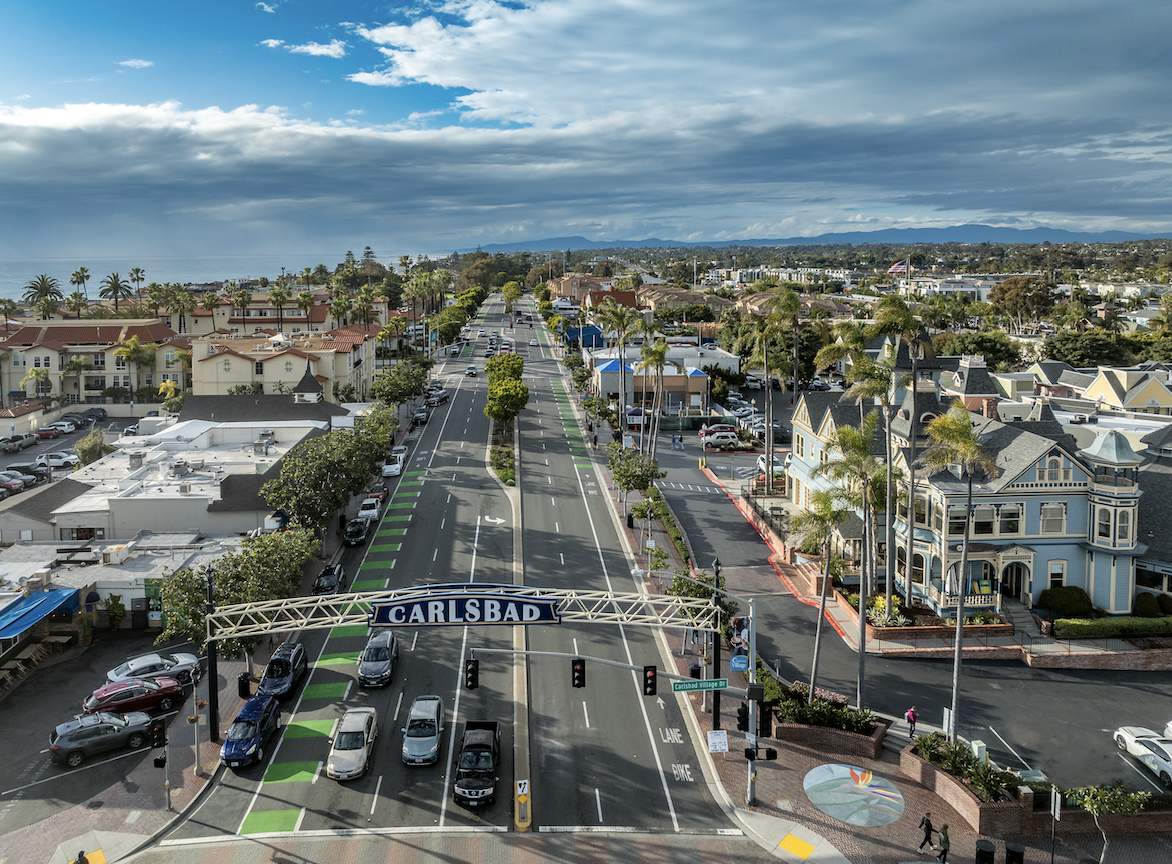
The beaches, the Village, and the laid-back coastal lifestyle that made so many people fall in love with Carlsbad are still here. But the city surrounding them is changing—and several major projects could reshape how people live, travel, and spend their time here for decades to come.
Some of these changes are designed to make Carlsbad more convenient and connected. Others add much-needed housing, create new public spaces, or rethink underused properties. At the same time, many longtime residents are asking an important question: How does Carlsbad grow without losing the character that made it feel like home?
Here are seven major projects and ongoing conversations helping define Carlsbad’s next chapter.
1. Veterans Memorial Park Is Becoming a Reality
For years, Veterans Memorial Park felt like one of those projects that continued appearing in city presentations without ever becoming a physical place. That changed in July 2026, when Carlsbad officially broke ground on what will become the city’s largest community park.
Located on approximately 93.7 acres near Faraday Avenue and Cannon Road, the park is designed to serve two purposes: creating an active recreational space for the community while providing a meaningful place to recognize and honor veterans.
Plans include memorial plazas, a nature-inspired playground, picnic areas, open lawn space, native landscaping, accessible walking paths and Carlsbad’s first public bike track. The project will also feature support buildings, electric vehicle charging stations and public art intended to create a setting for reflection.
Unlike many of the attractions for which Carlsbad is best known—including its beaches, resorts, LEGOLAND and the Flower Fields—Veterans Memorial Park is designed primarily around the daily lives of local residents.
Once complete, it could give inland Carlsbad a major new community gathering place and change how families throughout the city spend their weekends.
2. Carlsbad Village Plaza Is Being Redeveloped
Carlsbad Village Plaza has been part of daily life in the community for more than 60 years. It was the kind of convenient neighborhood shopping center where residents could pick up groceries, run an errand or stop at one of the businesses they visited every week.
Now, the approximately four-acre property is being redeveloped into a mixed-use project with two five-story residential buildings, commercial space, and structured parking. Plans call for 218 apartments, including both market-rate and affordable units, along with approximately 13,800 square feet of neighborhood-serving commercial space.
From a planning perspective, the project reflects many of the priorities shaping development throughout California: more housing, greater density, mixed-use construction, walkability, and proximity to public transportation.
Carlsbad—and the San Diego region as a whole—needs more housing. At the same time, the redevelopment means losing a familiar shopping center and several businesses that were woven into residents’ routines.
That is why this project feels more personal than the numbers might suggest. For some residents, it represents progress and a better use of aging commercial property. For others, it feels like another piece of the old Village disappearing.
Both perspectives reveal the central tradeoff Carlsbad is navigating: creating room for the city’s future without erasing the places that shaped its past.
3. Commercial Flights Have Returned to McClellan-Palomar Airport
For North County residents, flying out of San Diego International Airport can turn a relatively short trip into an all-day event. There is the drive south, unpredictable traffic, airport parking, and the additional time required before even reaching the gate.
Commercial service at McClellan-Palomar Airport could offer a much more convenient alternative.
United Airlines now provides service from Carlsbad to Denver and San Francisco, while American Airlines offers service between Carlsbad and Phoenix. For frequent travelers, starting a trip close to home represents a significant lifestyle upgrade.
However, expanded commercial service also comes with tradeoffs. Neighborhoods near the airport may experience additional traffic, aircraft activity, and noise. The County of San Diego maintains a voluntary noise-abatement program, but residents living beneath or near common flight paths may still notice a difference.
Commercial flights will not eliminate the need for trips to San Diego International, especially for travelers seeking a wider selection of nonstop destinations. But Palomar Airport is once again becoming a functional regional travel option—and that could influence how North County residents think about where they live and how easily they can travel.
4. Carlsbad’s COASTER Stations Could Become Mixed-Use Neighborhoods
Today, much of the land surrounding the Carlsbad Village and Poinsettia COASTER stations is devoted to parking. That may not remain the case forever.
The North County Transit District has been exploring transit-oriented development around both stations, potentially adding housing, commercial uses, and community amenities to land currently used primarily by commuters.
Plans for the Carlsbad Village Station site have included 234 multifamily residences, affordable housing, office space, retail, and a hotel. The Poinsettia Station proposal has included additional housing and neighborhood-serving commercial space.
For decades, the stations had a straightforward purpose: park your car, board the train, and drive home when you return. Transit-oriented development asks a different question: What if people could also live, work, dine, and shop around the station?
If these projects move forward, they could create more active and walkable neighborhoods while placing additional housing close to regional transit. They could also reduce or reconfigure existing commuter parking and add density to areas accustomed to functioning differently.
Projects involving transit agencies, private developers, and city approvals can take years to materialize. Still, the land surrounding Carlsbad’s train stations has the potential to become some of the most consequential real estate in the city.
5. The Roosevelt Is Bringing More Mixed-Use Development to the Village
The Roosevelt is smaller than the Village Plaza or COASTER station redevelopments, but it clearly shows how individual blocks within Carlsbad Village are changing.
Approved for 2621 Roosevelt Street, the project will replace an existing commercial structure with a four-story mixed-use building. Plans include 23 apartments, approximately 5,400 square feet of commercial space, and covered parking.
The project reflects a broader movement toward live-work-play development in the Village. Instead of separating homes, offices, stores, and restaurants into different areas, mixed-use buildings bring several functions together within a more walkable environment.
Parking has been a primary concern for projects like this one. Because the property is close to public transportation, state law restricts how much parking a city can require. That may support California’s larger housing and transit goals, but it does not necessarily ease residents' concerns, who already find Village parking challenging.
Twenty-three apartments will not transform downtown Carlsbad on their own. When combined with other housing and mixed-use projects, however, The Roosevelt illustrates the direction the Village is moving: denser, more walkable, and more urban than it has historically been.
6. The Village and Barrio Master Plan Is Guiding What Comes Next
The Village and the Barrio are considered the historic heart of Carlsbad. The city's challenge is how to protect that identity while preparing both neighborhoods for continued growth.
The Village and Barrio Master Plan establishes the long-term framework for land use, development, mobility, and community character in these areas. Its recommendations include improved public gathering spaces, wider sidewalks, pedestrian-oriented lighting, updated parking strategies, and design standards intended to help new construction complement its surroundings.
One of the plan’s priorities is the proposed Grand Avenue Promenade, envisioned as a signature space for walking and gathering. The city has also adopted objective design standards for new multifamily and mixed-use projects to help future development better reflect the character of the Village and Barrio.
The overall direction sounds simple: modernize these neighborhoods without allowing them to become indistinguishable from every other redeveloped coastal community in California.
Executing that vision is much more complicated.
Protecting everything exactly as it can make it difficult to add housing, support new businesses, or adapt to changing needs. Developing too aggressively can eliminate the smaller buildings, familiar businesses, and informal character that gave the neighborhoods their identity.
Carlsbad is attempting to find the middle ground. The master plan provides a roadmap, but its success will ultimately be determined one project—and one block—at a time.
7. The Carlsbad Theatre Represents the Preservation Debate
Few places symbolize Carlsbad’s relationship with its past as clearly as the Carlsbad Theatre.
Built in 1927, the State Street landmark has served as a movie theater and event venue while remaining a familiar part of the Village streetscape for nearly a century. Even residents who never attended a performance there are accustomed to seeing its marquee downtown.
Its future, however, remains uncertain.
Community members have advocated for preserving the building as a theater, arts venue, or cultural space rather than allowing it to become another conventional commercial project. But protecting a beloved building requires more than recognizing its historic significance. Ownership, restoration costs, potential uses, and long-term financial viability all influence what can realistically happen next.
The City of Carlsbad has established historic-preservation initiatives, including a Mills Act program intended to encourage the rehabilitation and preservation of qualifying historic properties. Even so, having preservation tools available does not guarantee that a specific building will be saved.
The theater represents the larger question underlying many of Carlsbad’s current development debates: When a city evolves, which pieces of its history will it carry forward—and which will gradually disappear?
What Do These Changes Mean for Carlsbad Real Estate?
No single development project will determine the future of Carlsbad’s housing market. Taken together, however, these changes could influence how buyers evaluate different areas of the city.
Expanded airport service may make communities near Palomar Airport more convenient for frequent travelers while increasing sensitivity to aircraft noise. Transit-oriented development could make the Village and Poinsettia areas more walkable and introduce new housing, retail, and activity. Veterans Memorial Park may become a significant lifestyle amenity for inland neighborhoods.
At the same time, increasing density and redevelopment could change the experience of living near the Village. Buyers drawn to Carlsbad’s relaxed beach-town atmosphere may need to look more carefully at what is planned around a particular property—not simply what exists there today.
Real estate decisions are ultimately about more than square footage or the number of bedrooms. They also depend on understanding how a neighborhood functions now and how it may change over time.
Is Carlsbad Still a Good Place to Live?
Carlsbad still offers many of the qualities that have long attracted residents: beaches, strong community amenities, established neighborhoods, employment centers, and access to destinations throughout North County.
However, Carlsbad is not standing still.
The version of the city someone remembers from 10 or 20 years ago is already evolving. For some residents and buyers, additional housing, improved public spaces, expanded travel options, and more walkable neighborhoods will make the city even more appealing. Others may prefer areas where the pace of change feels slower, and the traditional suburban or coastal character remains more intact.
Neither preference is wrong. The key is understanding which part of Carlsbad best fits the lifestyle you want—not only today, but in the years ahead.
Frequently Asked Questions About Carlsbad’s Growth
What major development projects are happening in Carlsbad?
Major projects include Veterans Memorial Park, the redevelopment of Carlsbad Village Plaza, transit-oriented development proposed around the Carlsbad Village and Poinsettia COASTER stations, and new mixed-use buildings such as The Roosevelt. The city is also implementing long-term improvements through the Village and Barrio Master Plan.
Are commercial flights available from Carlsbad?
Yes. McClellan-Palomar Airport currently offers commercial service to select destinations, including Denver, San Francisco, and Phoenix. Routes and schedules may change, so travelers should confirm current availability directly with the airlines.
Is Carlsbad Village becoming more densely developed?
Several approved and proposed projects would add apartments, commercial space, and other uses within or near the Village. The city’s planning strategy emphasizes mixed-use and walkable development while also establishing design standards intended to preserve neighborhood character.
Will Carlsbad’s train stations be redeveloped?
NCTD has been working on proposals to redevelop land surrounding the Carlsbad Village and Poinsettia COASTER stations with housing, retail, and other community uses. These are long-term projects, and their details or timelines may change during the planning and approval process.
How could these projects affect Carlsbad homebuyers?
New development may improve access to parks, transportation, businesses, and other amenities. It may also introduce additional density, traffic, parking demand, or noise in certain locations. Buyers should investigate planned development near any property they are considering.
Thinking About Moving to Carlsbad?
Understanding Carlsbad real estate means looking beyond the home itself. The surrounding neighborhood, future development, and changing transportation options can all affect how a property fits your lifestyle over time.
If you are considering buying or selling a home in Carlsbad, the McGovern-Schwarz Group can help you understand the differences between its neighborhoods and what current changes may mean for your plans.
Check out this article next