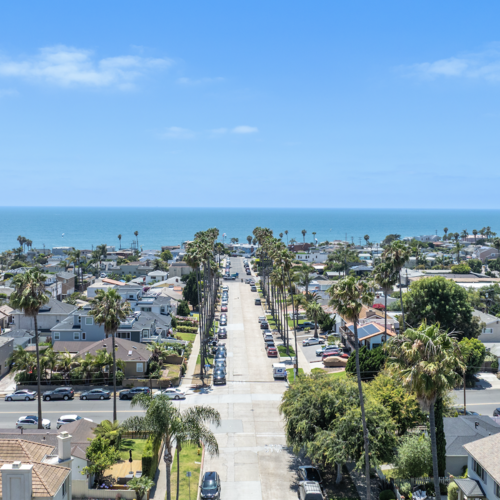


Los Angeles and San Francisco may get more national attention, but San Diego offers something many people find harder to resist: the career opportunities, culture, and energy of a major California city paired with a more relaxed way of life. Of course, living here comes at a price. San Diego’s housing market is expensive, and buyers often have to rethink how much space they need or which neighborhood fits their budget. If you’re considering moving to California, here are the top ten reasons people move to San Diego.
1. The Weather Changes How You Live
Everyone knows San Diego has pleasant weather. What’s harder to understand until you live here is how much that weather changes your daily routine.
Outdoor plans don’t have to be limited to a short season. You can walk the neighborhood, visit the beach, eat outside, hike, or take the kids to a park during most months of the year.
That consistency can make everyday life feel easier, especially for people relocating from places where snow, humidity, heavy rain, or extreme temperatures regularly interrupt their plans.
San Diego County also has several distinct microclimates. Coastal neighborhoods tend to stay cooler because of the marine layer, while communities just a few miles inland can be noticeably warmer.
That difference can affect:
- How often you use air conditioning
- Your monthly utility costs
- The type of yard or outdoor space you want
- How frequently you visit the beach
- The temperature you experience during the summer
Someone who loves the cooler coastal climate may prioritize Oceanside, Carlsbad, Encinitas, or Point Loma. A buyer who wants more sunshine, space, or value may prefer an inland community. The weather is good throughout the region, but it isn’t identical everywhere.
2. San Diego’s Coastline Is an Irreplaceable Amenity
San Diego County has approximately 70 miles of coastline, and access to it shapes the entire housing market.
Beaches such as La Jolla Shores, Moonlight State Beach, Coronado, Mission Beach, and Oceanside aren’t simply vacation destinations. They’re part of residents’ daily routines, creating lasting demand for coastal homes and neighborhoods.
When buyers can’t find the right property or price in Del Mar or La Jolla, they may expand their search to Encinitas or Carlsbad. If those communities don’t work, Oceanside could become the next option.
The coastal premium doesn’t stop directly at the sand, either. Even inland buyers benefit from having beaches within a reasonable drive.
For many people, it isn’t necessary to see the ocean from the living room. Knowing they can reach it after work or spend Saturday morning at the beach is enough to make San Diego worth choosing.
3. The Economy Isn’t Dependent on One Industry
San Diego’s employment base is more diverse than many people realize. The region is supported by several major industries, including:
- Defense and the military
- Biotechnology and life sciences
- Healthcare and medical research
- Cybersecurity
- Technology
- Tourism
- Higher education
That mix matters because San Diego isn’t relying on one industry to support the entire local economy.
A slowdown in technology, for example, doesn’t eliminate demand from military households, healthcare professionals, researchers, or biotech employees. Different industries bring different types of buyers and renters into the region.
The variety also makes San Diego attractive to couples whose careers are in separate fields. One person may work in healthcare while the other works in defense, technology, or education. Both can find substantial employment networks in the same county.
For the housing market, multiple high-income employment sectors create several buyer pools competing for a limited number of homes.
4. Everyday Life Can Feel Like a Vacation
Most people expect to visit their new city’s major attractions once or twice before sticking close to their own community. San Diego’s attractions have a way of becoming part of the routine.
Families may purchase annual memberships to the San Diego Zoo, Safari Park, Birch Aquarium, LEGOLAND, or SeaWorld. Residents visit Balboa Park for museums, events and walks rather than treating it as a one-time tourist destination.
The same is true of the region’s beaches, hiking trails, waterfronts, restaurants, and neighborhood events.
Living here can mean:
- Visiting the zoo on an ordinary Saturday morning
- Taking an evening walk along the coast
- Hiking before brunch
- Spending the afternoon in Balboa Park
- Exploring a new restaurant in Little Italy
- Driving to Julian for a change of scenery
- Heading south of the border for a completely different cultural experience
When your surroundings provide so much of the entertainment, owning the largest possible house may matter less. Many San Diego buyers willingly trade square footage for a better location because the neighborhood and surrounding region function as an extension of the home.
5. Universities and Medical Institutions Create Lasting Demand
San Diego’s universities, hospitals, and research institutions play an important role in the regional economy.
UC San Diego is a major center for research and innovation, particularly in life sciences, medicine, engineering, and technology. The university supports a broader ecosystem of laboratories, hospitals, startups and established companies throughout the Torrey Pines and University City areas.
San Diego State University is also expanding its reach through SDSU Mission Valley. At full buildout, the Mission Valley development is planned to include up to 4,600 market-rate and affordable homes, 1.6 million square feet of research and innovation space, retail, a hotel and 80 acres of parks and open space. The first residential occupancy is expected as early as 2028.
Healthcare systems and institutions such as UC San Diego Health, Scripps Health, Sharp HealthCare, and Rady Children’s Hospital add another layer of employment stability.
These institutions don’t just create jobs. They bring students, faculty members, physicians, researchers, and support professionals into the housing market. Homes near major education and medical corridors can stay particularly competitive because many owners stay for years, limiting how many properties come up for sale.
6. San Diego Is Investing in Infrastructure
San Diego won’t feel like New York, Chicago, or San Francisco when it comes to public transportation. Most households will still find a car useful, and you should consider commuting patterns carefully before choosing a neighborhood, but the region continues to invest in transportation and infrastructure.
The first 19-gate phase of San Diego International Airport’s new Terminal 1 opened in September 2025. Three additional gates opened in 2026, with the remaining eight scheduled for early 2028, bringing the terminal to 30 gates.
The trolley system also connects several major residential, educational, and employment areas. The UC San Diego Blue Line runs from the San Ysidro border area through downtown and north to University City, providing access to UC San Diego and the surrounding business district.
Transportation improvements don’t make every commute simple, but they can change which neighborhoods are practical for certain buyers. If you’re moving to San Diego, it’s worth evaluating not only today’s commute but also planned projects near the communities you’re considering.
7. You Can Choose From Radically Different Lifestyles
San Diego County includes urban neighborhoods, coastal towns, established suburbs, master-planned communities, rural properties, and mountain communities, all within the same region.
Depending on your priorities, you could choose:
- Downtown or Little Italy for an urban, walkable lifestyle
- North Park or South Park for restaurants, older homes and neighborhood energy
- Encinitas or Carlsbad for coastal North County living
- Carmel Valley or Del Sur for planned suburban amenities
- Rancho Peñasquitos or San Carlos for established neighborhoods and outdoor access
- Chula Vista or Eastlake for South County convenience and newer communities
- Ramona or Fallbrook for more land and a rural atmosphere
- Julian or Pine Valley for a quieter mountain environment
You can change your lifestyle dramatically without leaving the county. Someone may begin in a downtown condo, move to a North County suburb, and eventually choose a more rural property, all while remaining in the same regional job market.
8. The Military Provides an Unusual Level of Stability
San Diego’s military presence is one of the region’s most important economic anchors.
Camp Pendleton, Naval Base San Diego, Marine Corps Air Station Miramar, and other military facilities support a large network of active-duty personnel, civilian employees, contractors, and local businesses.
The military also creates consistent relocation cycles. Service members and their families arrive and depart every year, supporting both the rental and resale markets in communities near major installations.
Housing demand generated by military households isn’t tied to the hiring decisions of one private company. It’s a permanent part of San Diego’s regional economy. That can be particularly meaningful in areas such as Oceanside, Fallbrook, Serra Mesa, Tierrasanta, Chula Vista, and other communities within commuting distance of military employment centers.
Military buyers should still compare commute times carefully. San Diego County is large, and a home that appears reasonably close on a map may involve a much longer drive during peak traffic.
9. Limited Housing Supply Supports Long-Term Demand
No home is guaranteed to appreciate, and buyers shouldn’t purchase a property based solely on the assumption that its value will rise. Still, San Diego has structural conditions that have historically supported long-term housing demand.
The region is constrained by the Pacific Ocean to the west, mountains and protected land to the east, the international border to the south, and military-owned land in several parts of the county.
California continues to adopt legislation intended to accelerate certain types of housing construction, particularly in established urban areas. Those policies may make development easier in some locations, but they don’t change San Diego’s basic geography. New housing can be built, but not everywhere.
California’s Proposition 13 can also benefit long-term homeowners by generally limiting annual increases in a property’s assessed value to no more than 2% until a reassessment event occurs. It doesn’t cap every component of a homeowner’s tax bill, but it can provide more predictability for people who remain in the same property for many years.
Together, limited land, slow housing production and consistent demand help explain why San Diego homes remain expensive.
10. San Diego Offers a Balance Other California Cities Don’t
San Diego is close enough to Los Angeles for a weekend trip, but daily life often feels very different.
The region offers major employers, universities, hospitals, dining, professional sports, and cultural attractions without feeling as consistently dense or intense as Los Angeles.
It also provides more urban energy and career opportunities than many smaller coastal communities.
Residents can spend the morning at the beach, work in a major employment center, have dinner in a walkable neighborhood, and escape to the mountains the following day. Big Bear, Julian, Anza-Borrego, Orange County, and Mexico can all become part of the broader Southern California lifestyle.
San Diego can feel expensive when you compare homes only by price and square footage, but for many people, that range is the deciding factor. Buyers who choose San Diego are often evaluating something larger: the climate, career opportunities, outdoor access, culture, and lifestyle.
Is Moving to San Diego Worth It?
Moving to San Diego may be worth it if the lifestyle and professional opportunities align with your priorities—and if you can build a realistic plan around housing costs.
Homes are expensive, traffic can be frustrating, and buyers may need to compromise on size, age, or location.
But San Diego offers several advantages for prospective home buyers:
- A mild climate
- Coastal access
- A diverse economy
- Major universities and healthcare institutions
- A strong military presence
- Distinct neighborhoods and communities
- Year-round recreation
- Limited housing supply
- Continued infrastructure investment
- Access to the rest of Southern California and Mexico
Those advantages reinforce one another. People move here for jobs, stay for the lifestyle, and compete for housing within a geographically constrained region.
Find the Right San Diego Neighborhood With the McGovern Schwarz Group
Deciding that you want to move to San Diego is only the beginning. The next step is determining which part of the county fits your job, budget, and preferred lifestyle. A buyer who wants a walkable coastal neighborhood will need a completely different search strategy from someone prioritizing schools, newer construction, land, or access to a military base.
The McGovern Schwarz Group helps buyers compare San Diego communities, understand the tradeoffs behind each location, and narrow the search before they begin making offers.
If you’re relocating from outside California, the team can also help you approach the process with realistic expectations about home prices, commute times, microclimates, and the differences between San Diego’s many neighborhoods.
Frequently Asked Questions About Moving to San Diego
Why are so many people moving to San Diego?
People are drawn to San Diego for its mild climate, beaches, outdoor lifestyle, employment opportunities, and variety of neighborhoods. The region offers the amenities of a major city with a more relaxed atmosphere than many other large California markets.
Is San Diego more affordable than Los Angeles or San Francisco?
Affordability depends on the specific neighborhoods and housing types being compared. San Diego is an expensive market, but some buyers find that it offers a better balance of lifestyle, space, and location than comparable areas of Los Angeles or the Bay Area.
What should I know before moving to San Diego?
Research commute times, microclimates, housing types, school boundaries, insurance costs, HOA dues and special assessments. San Diego County is large, and neighborhoods that look close together on a map can offer very different lifestyles.
What are the best areas of San Diego for families?
Families often consider Carmel Valley, Rancho Peñasquitos, Del Sur, Carlsbad, Encinitas, San Marcos, Poway, and several other communities. The right choice depends on budget, commute, desired amenities, and school needs. Buyers should verify current school assignments directly with the relevant district.
Can you live in San Diego without a car?
It’s possible in some neighborhoods, including parts of downtown, Little Italy, North Park, and areas near trolley stations. However, most residents find a car useful because the county is geographically large and many trips aren’t convenient by public transportation.
How much money do you need to move to San Diego?
The answer depends on whether you’re renting or buying, the neighborhood you choose and the size of your household. Buyers should account for the down payment, closing costs, property taxes, insurance, HOA dues and potential special assessments—not only the purchase price.
Does San Diego have good job opportunities?
San Diego has substantial employment sectors in defense, biotechnology, healthcare, cybersecurity, technology, tourism, and education. Opportunities vary by industry and location, so compare potential commutes before choosing a neighborhood.
Is San Diego a good place to buy a long-term home?
San Diego can make sense for buyers planning to stay long-term, particularly when the property fits their budget and lifestyle without relying on future appreciation. Limited land and sustained demand have historically supported the market, but no individual home is guaranteed to increase in value.
Check out this article next